

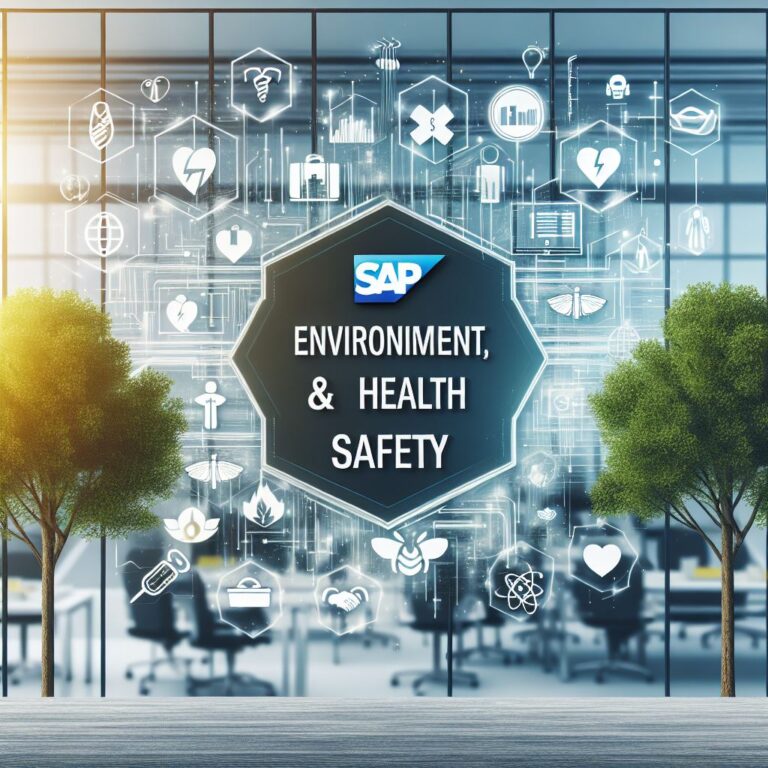
An Approach to the Key Tool for Environmental and Labor Management
Sustainability and safety are increasingly becoming priorities for companies, and having tools that allow these aspects to be managed efficiently can be a differentiating factor.

SAP Environment, Health, and Safety (EHS) is presented as a comprehensive solution that helps organizations comply with environmental regulations, protect their employees, and improve their operational sustainability. Let's see what SAP EHS is, how it's used in SAP, its benefits, and why it's a tool worth considering.
What is SAP EHS?
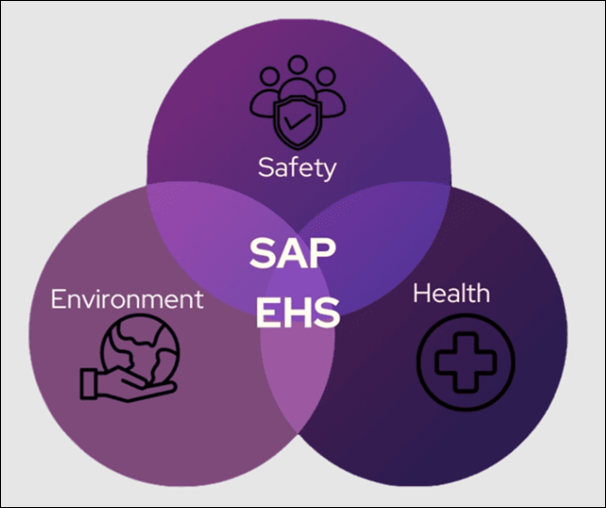
SAP EHS is a software solution designed to help companies manage their environmental, health, and safety risks. This tool allows organizations to monitor and control their environmental impacts, ensure regulatory compliance, and protect the health and safety of their employees.

EHS solutions portfolio.
SAP EHS integrates seamlessly with other SAP modules, providing a holistic and centralized view of risk management.
Key Components of SAP EHS
SAP EHS is divided into several components that address different areas of environmental and safety management. These are some of the most important:
Environmental Risk Management:
- Emissions Monitoring: SAP EHS enables companies to track and manage their greenhouse gas emissions and other pollutants. This is crucial for complying with environmental regulations and reducing their ecological impact.
- Waste Management: It facilitates the management of hazardous and non-hazardous waste, ensuring that it is handled safely and in accordance with regulations.

The EHS Environment Management solution establishes a transparent business process that guarantees and demonstrates compliance with all EHS requirements within the company.
Occupational Health and Safety:
- Risk assessment: It helps to identify and assess workplace risks, implementing preventative measures to minimize accidents and occupational illnesses.
- Training and Awareness: It provides tools for the ongoing training of employees in safe and healthy practices.

The EHS Health and Safety solution enables an end-to-end process to identify and manage all types of hazards to the well-being of the workforce.
Occupational Health:
It supports the general occupational health care of employees in your company and the planning and implementation of special health surveillance protocols. This surveillance is crucial for those exposed to chemical, physical, or biological influences, as well as for those who perform activities that are hazardous to their health.

The protocols may include vaccines and, in the United States, randomized drug trials. The application is delivered as a Repeatable Customer Solution (RCS) in SAP S/4HANA.

Occupational Health It provides a repository to track employees' occupational health history and drive a risk-based occupational health process with the integration of core Human Resources data.
Incident Management
To meet your EHS requirements on a regional and global scale, use the EHS Incident Management component to report, review, and complete incidents, safety observations, and near misses.

This solution provides several methods for reporting data. After initial reporting, you can gather additional information from those involved, investigate why an incident occurred (including any safety violations and observations), and track the financial impact on the organization and its assets.
It can also assess risk, report data to internal and external stakeholders to meet the company's legal, regulatory, and reporting responsibilities, and analyze aggregated incident data.

The solution EHS Incident Management It aims to provide a centralized approach to tracking all types of incidents.
Change Management:
The change management solution provides a system to effectively execute and monitor change within an organization so that it does not lead to unknown or uncontrolled operational risk.

This solution enables organizations to plan, assess, and manage changes to their processes, systems, and organizational structures. Through a structured approach, potential risks can be identified and mitigated, effective communication among stakeholders can be ensured, and changes can be implemented in an orderly and controlled manner.

The Change Management solution provides a system for effectively implementing and monitoring changes within an organization.
How is SAP EHS used in SAP?
SAP EHS integrates with other SAP modules, such as SAP S/4HANA, SAP Ariba, and SAP Analytics Cloud, to provide comprehensive sustainability and safety management. Here are some examples of how SAP EHS is used in the SAP environment:
Integration with SAP S/4HANA:
SAP EHS integrates with SAP S/4HANA to provide efficient resource management and optimize operational processes.
 This allows companies to reduce waste, improve energy efficiency, and minimize their environmental impact.
Integration with SAP Ariba:
SAP EHS can be used in conjunction with SAP Ariba to improve transparency and traceability in the supply chain.
 This ensures that suppliers meet sustainability and safety standards, from production to delivery.
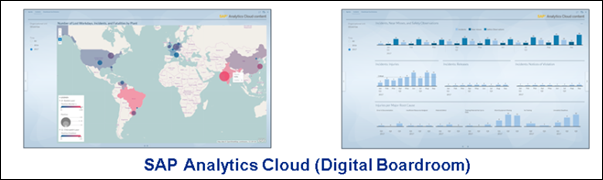
Integration with SAP Analytics Cloud:
SAP EHS integrates with SAP Analytics Cloud to provide advanced analytics and reporting capabilities. This allows companies to measure and report their environmental impact in detail, facilitating informed decision-making and communication with stakeholders.
Benefits of implementing SAP EHS
Risk Reduction:
By proactively identifying and managing environmental and safety risks, companies can reduce the likelihood of incidents and their consequences. This not only protects employees but also minimizes operational disruptions and the costs associated with accidents and penalties.
Regulatory Compliance:
SAP EHS ensures that companies comply with all applicable regulations, avoiding fines and improving corporate reputation.
 The ability to keep up with local and international regulations is crucial in a constantly changing regulatory environment.
Improving Sustainability:
By optimizing resource management and reducing environmental impact, companies can move towards their sustainability goals.
 This includes reducing carbon emissions, efficient waste management, and conserving natural resources.
Employee Protection:
By improving working conditions and reducing risks, the health and safety of employees is protected, which can increase morale and productivity.
 A safe and healthy work environment is fundamental to the well-being of employees and the long-term success of the company.
Transparency and Traceability:
SAP EHS improves transparency and traceability in the supply chain, ensuring sustainable and ethical practices.
 This is especially important for companies seeking to meet corporate social responsibility standards and satisfy the expectations of consumers and stakeholders.
Example of Use
A manufacturing company can use SAP EHS to monitor its CO2 emissions, manage the safe handling of chemicals, and conduct safety audits at its plants. This not only ensures compliance with environmental regulations but also improves operational sustainability and protects its employees.
Conclusion
SAP EHS is a powerful tool for any company committed to sustainability and safety. By implementing this solution, organizations can effectively manage their environmental and safety risks, comply with regulations, and move toward a more sustainable future.
 Integrating SAP EHS with other SAP modules provides a holistic and centralized view of risk management, facilitating informed decision-making and continuous improvement.
Discover our SAP training
Find out everything on our blog and train in SAP with our Sap S/4Hana Finance Official Certificate.